
The regulator asked banks to maintain a high level of capital adequacy ratio to ensure that risks in the sector within manageable limits. The central bank also said there was a need to enhance risk management and added that market participants and securities regulator would expand the information provided about securitised products and their underlying assets.
Announcing the measures, Finance Minister P Chidambaram said the Reserve Bank of India had agreed to release Rs 25,000 crore immediately to lending institutions.
The committee on financial inclusion, headed by C Rangarajan, the chairman of Prime Minister's Economic Advisory Council, has recommended that the profits transferred to their reserves by such banks should be exempted from tax till the banks achieve the standard capital adequacy ratio (CAR).
Bank of India, the first public sector bank to establish a foreign branch, would open another five overseas offices and raise tier-II capital of Rs 300-500 crore (Rs 3-5 billion) to improve its capital adequacy ratio.
FinMin added the Capital Adequacy Ratio of each bank is above 10 per cent, well above the regulatory requirement of nine per cent.

The government has said that public sector banks have asked for much more capital than it can give.
IDBI Bank on Thursday opened its first Currency Chest for the Eastern region at Kolkata and said it will open 28 more branches in urban as well as semi-urban areas during the next six months as part of its multi-pronged aggressive expansion plans.
These bonds carry AAA/stable rating from Crisil. The tenure of this paper is expected to be 10 years. "The yields on the 10 year government bonds dipped from around 8.6 per cent at the end of September to about 5.7 per cent now. Hence, the bank will save on costs as it will be in a position to place bonds at lesser rates now," a senior SBI official said.
UTI Bank has raised Rs 170 crore through issue of preferential equity to Life Insurance Corporation, CDC and three other investors at a price of Rs 42 per share in the last few months, P J Nayak, chairman, UTI Bank, said on Wednesday.

Public-sector lenders Indian Overseas Bank (IOB) and Uco Bank are likely to raise funds through qualified institutional placement (QIP) next month. Punjab & Sind Bank is likely to follow suit later this financial year to meet the public shareholding norm of 25 per cent. When a public-sector unit raises funds through QIP, the money goes to the company because it involves issuing new shares whereas in the case of offer for sale (OFS), the money raised goes to the government because its shares are sold.
Dena Bank is planning to raise Rs 250 crore (Rs 2.50 billion) in the next three months via a mixture of subordinate bonds and second public issue to fund its expansion programmes and increase the capital adequacy ratio.

Infrastructure bonds, which were relied upon the most in 2024-25 (FY25) by commercial banks to raise funds through the domestic debt capital market amid lagging deposit growth, seem to have lost their sheen in FY26. So far in FY26, no bank has tapped the domestic debt capital market to raise funds via infra bonds, and the expectation is that the amount raised through this route will be significantly lower than that last year, unless credit demand picks up.

Public-sector banks (PSBs) are attracting the attention of investors and the PSU Bank Index has gained nearly 10 per cent in the past month. PSBs have seen return on assets (RoA) climbing to 1 per cent in 2024-2025 (FY25) and margins are believed to have moved up further in the first half of this financial year (H1FY26) with asset quality remaining stable.
'As the team builds, each of them will bring in a different perspective, new thinking.'

The bank's branch expansion and recruitment have been curtailed.

The Reserve Bank of India on Monday said that RBL Bank is well capitalised and its financial position remains "satisfactory", amid speculations relating to the private sector lender in certain quarters in wake of recent events surrounding the bank. In a statement, the Reserve Bank of India (RBI) also said there is no need for depositors and other stakeholders to react to speculative reports. The bank's financial health remains stable, it said.

If there is a decline in the number of Indian students pursuing higher studies in Canada due to the ongoing diplomatic tensions between the two countries, it may have implications for Indian banks operating in the North American country, senior bank officials said.

Given that it is only a temporary breather for PSBs, the government now needs to look at the harder options.
HDFC Bank expects to amalgamate its home loan major parent HDFC into itself by September next year, a top official said on Friday. Both HDFC and HDFC Bank held general meetings on Friday to seek shareholder approvals for what is billed as the largest merger in Indian corporate history at over $40 billion. At the time of announcing the merger on April 4 this year, the entities had said the merger will take 12-18 months.
'Although we are facing constraints related to lending and resource mobilisation, the government is aware of these.'
Kotak Mahindra Bank on Saturday reported a 25 per cent growth in its March quarter net profit at Rs 5,302 crore, limited by a drop in the core income due to narrow interest margins. On a standalone basis, the city-headquartered lender's Q4 net profit grew 18 per cent to Rs 4,133 crore. The FY24 consolidated net profit grew 22 per cent to Rs 18,213 crore.

Banks were earlier required to get a prior approval of the RBI for such investments which are subject to prudential limits.
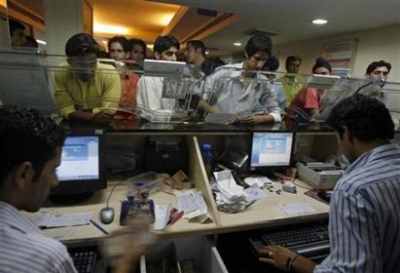
Analysts, however, said the timing of the infusion was good.

The RBI has changed the way it approached supervision in the past. Having seen a couple of collapses in the NBFC sector and the near-collapse of a few banks, it is focusing on regular drills to prevent a fire from breaking out, explains Tamal Bandyopadhyay.

'We found certain banks having lakhs of such accounts with apparently no valid reason.'

Public sector banks (PSBs) have delivered significant outperformance over the past three years and the sector has been re-rated. Given the growth and profitability expectations of an 18 per cent return on equity (RoE) over FY24-26, there is still a case for buying at the current levels. While the net interest margins or NIMs may remain range-bound or have a downward bias, there's optimism about possibly better opex ratios and lower non-performing assets (NPAs), plus scope for further credit cost reduction, and healthy treasury performances as interest rates trend down.

Treasury gains helped ICICI Bank post a nearly 10 per cent increase in the consolidated net profit for the April-June quarter at Rs 11,696 crore on Saturday. Growth in the core income slowed for the country's second largest private sector lender, but the treasury operations helped it report a 14.62 per cent rise in its post-tax profit at Rs 11,059 crore on a standalone basis. The core net interest income (NII) growth came at a multi quarter low of 7.3 per cent to Rs 19,553 crore for the reporting quarter.

The bottom lines of several private sector banks have taken a hit following the recent guidelines released by the Reserve Bank of India (RBI) on alternate investment fund (AIF) investments. Last month, the RBI announced that regulated entities, such as banks, non-bank lenders, and home financiers, cannot invest in AIFs that have directly or indirectly invested in companies that have borrowed money from the lenders. In case an entity had already made such an investment, they must liquidate the investment or make 100 per cent provision, RBI had said.

'We have a plan to plough back a 'This year in the first half we had profits of more than Rs 31,000 crore.' significant amount of profits this financial year.' 'We have seen this organic plough back of profit is one of best ways to support the equity of the bank.'

A Rs 525-crore contingency provision during the July-September period led to a 19 per cent fall in IndusInd Bank's share price on Friday (October 25). Contingency provisions are generally made when a lender expects more bad loans in the coming quarters. Shares of the bank on Tuesday (October 29) declined 1.53 per cent to settle at Rs 1,038.2 apiece on the BSE.

The Finance Ministry has asked top rung exectives of United bank of India to furnish bad loan recovery report on daily basis.

The capital infusion would help improve the financial health of banks. While some banks would get necessary regulatory capital while others would get it for fueling growth.

Total income of the lender rose to Rs 9,059.12 crore (Rs 90.59 billion) in the quarter under review, from Rs 7,818 crore (Rs 78.18 billion) in the corresponding period of last fiscal.

Analysts say strengthening bank's capital will boost earnings, bank needs chief with long stint to run show
